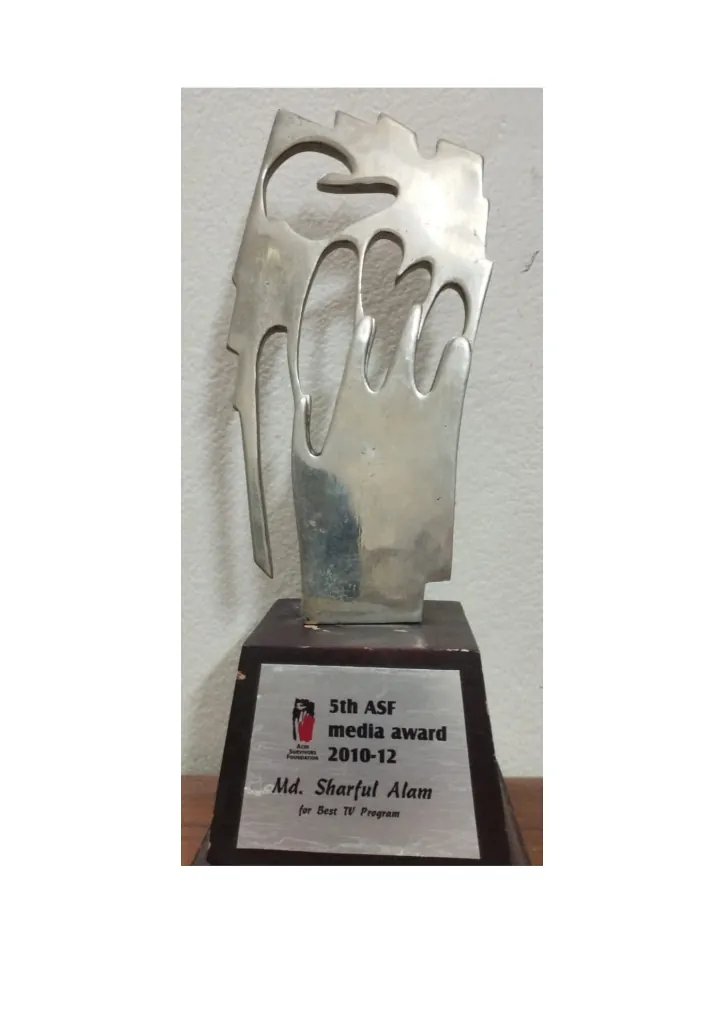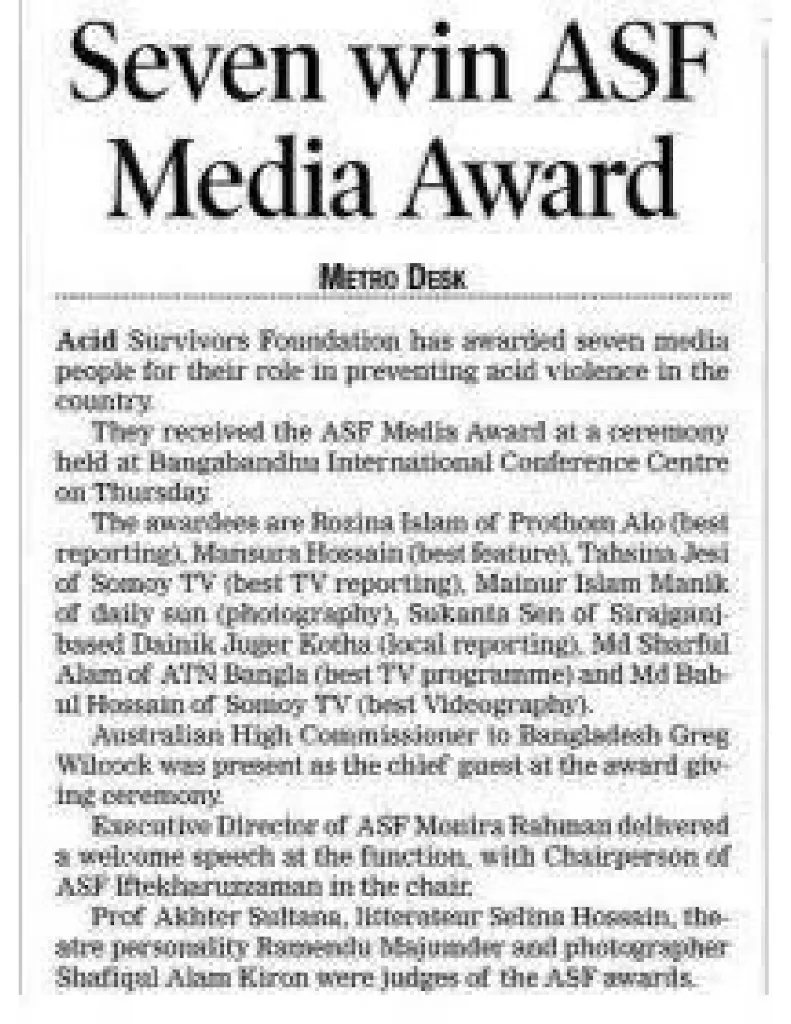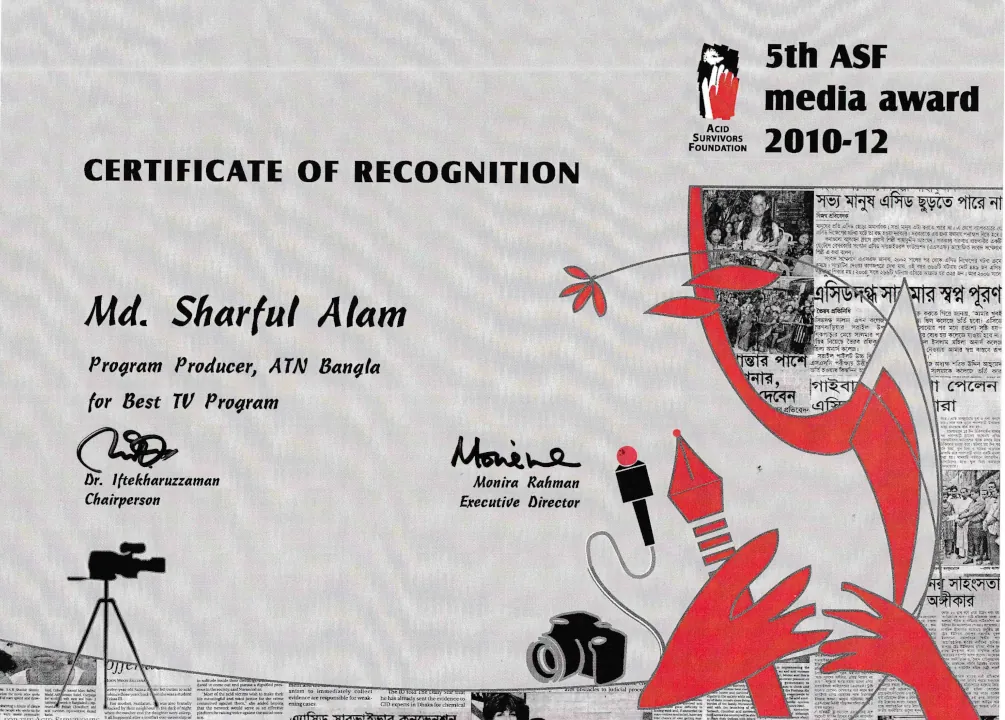
In 2013, I was honored to receive the ASF Media Award, one of Bangladesh’s most prestigious recognitions in the field of rights-based journalism. The Acid Survivors Foundation (ASF), in collaboration with its development partners, confers this award annually to celebrate outstanding contributions by journalists who help raise public awareness and drive policy change to prevent acid violence and promote gender justice across the country.
I earned this recognition for my television documentary broadcast on ATN Bangla, which focused on the lives, struggles, and resilience of acid attack survivors especially women and children across different regions of Bangladesh. The production aimed to illuminate the root causes of acid violence, such as poverty, gender discrimination, social stigma, and lack of access to justice, while also portraying inspiring stories of recovery, empowerment, and reintegration into society.
The documentary combined strong journalistic research, creative direction, and human-centered storytelling. As the programme’s planner, scriptwriter, and producer, I supervised all stages of production from initial field research and interviewing survivors to designing the shooting plan, conducting on-site direction, and editing the final broadcast version. The film emphasized not only the human cost of acid violence but also the urgent need for community-based prevention, rehabilitation programs, and strict enforcement of laws protecting victims.
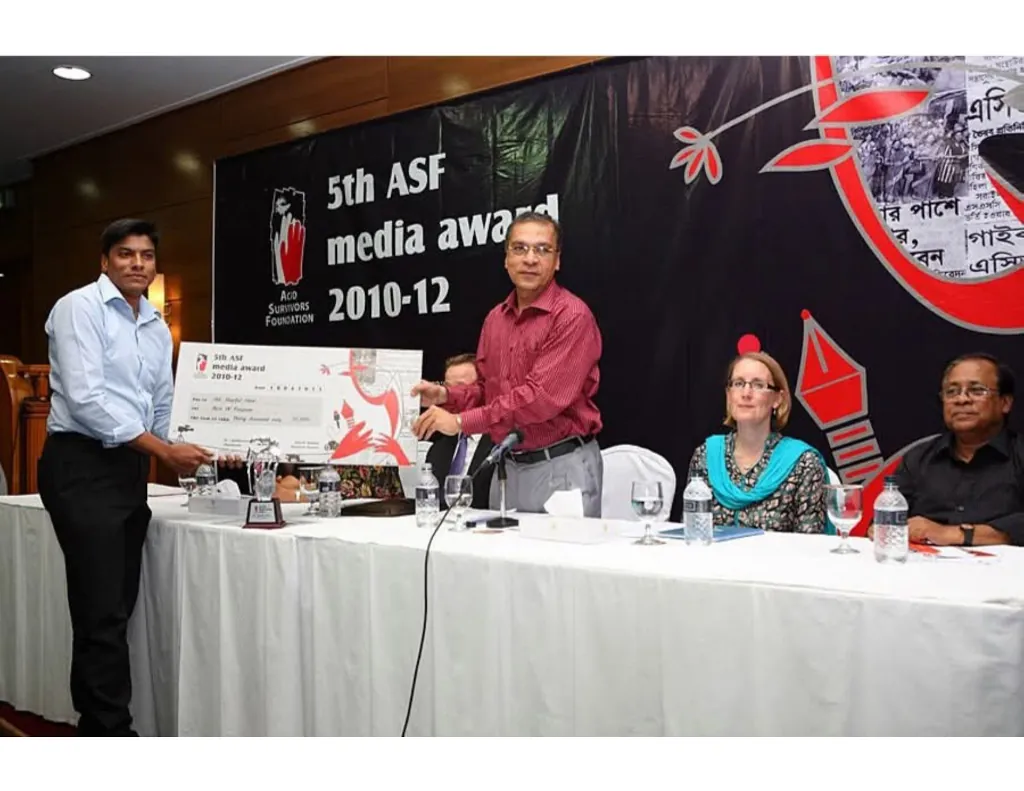
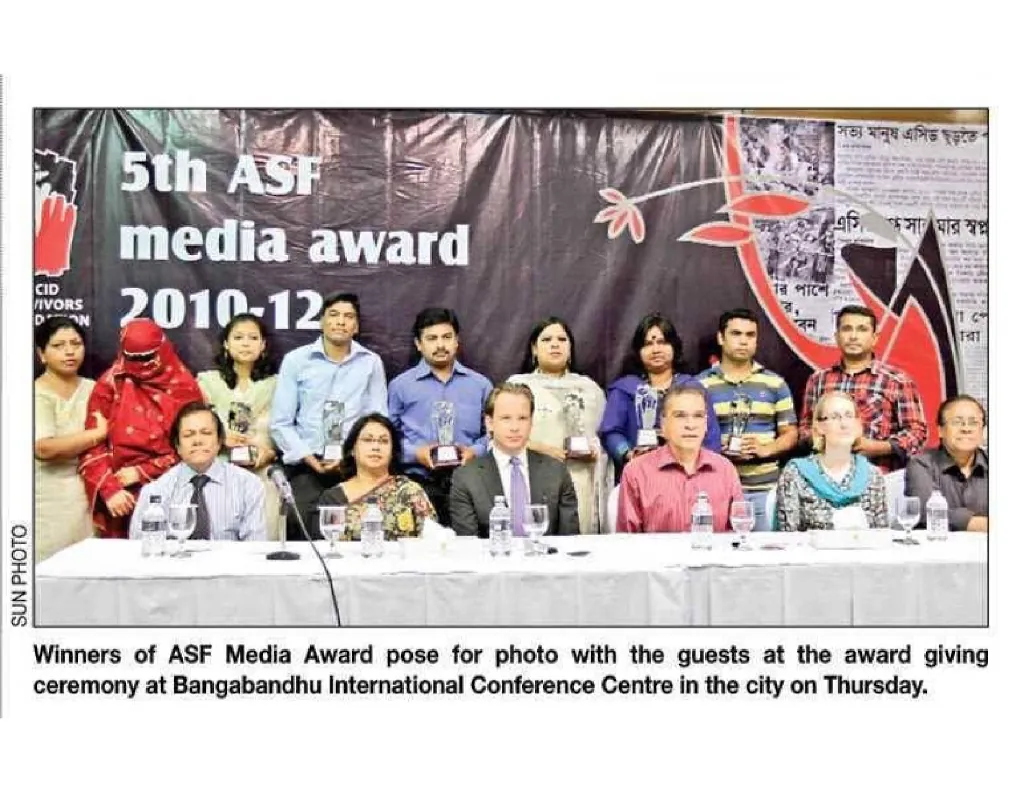
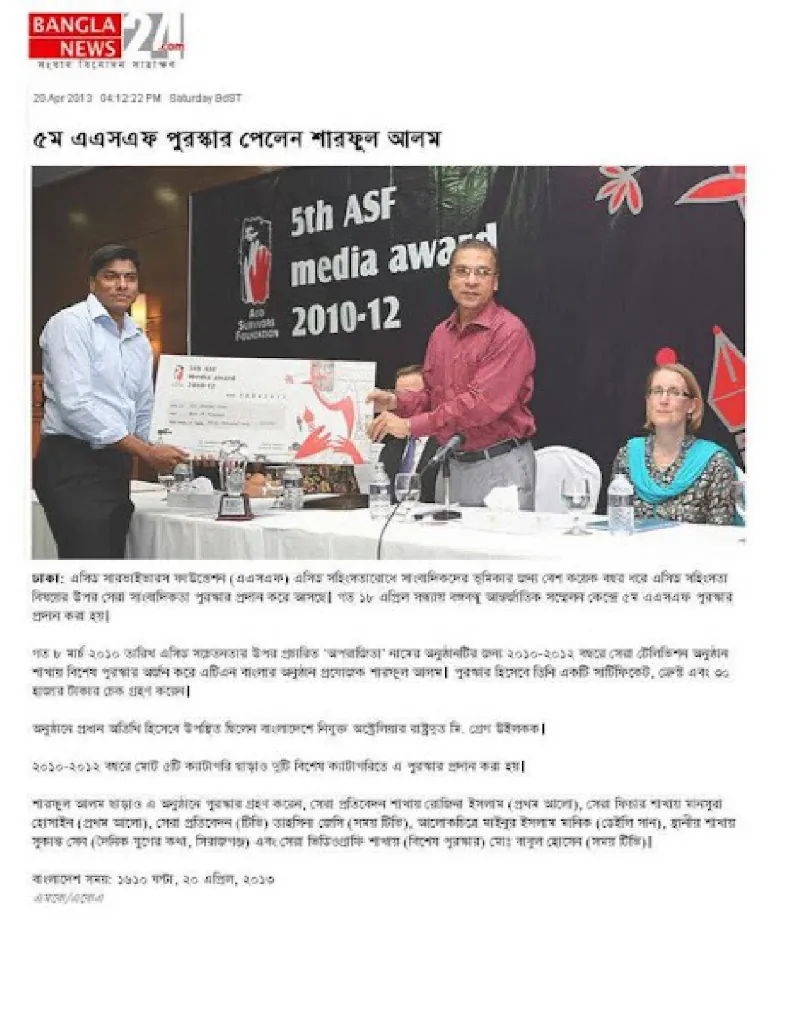
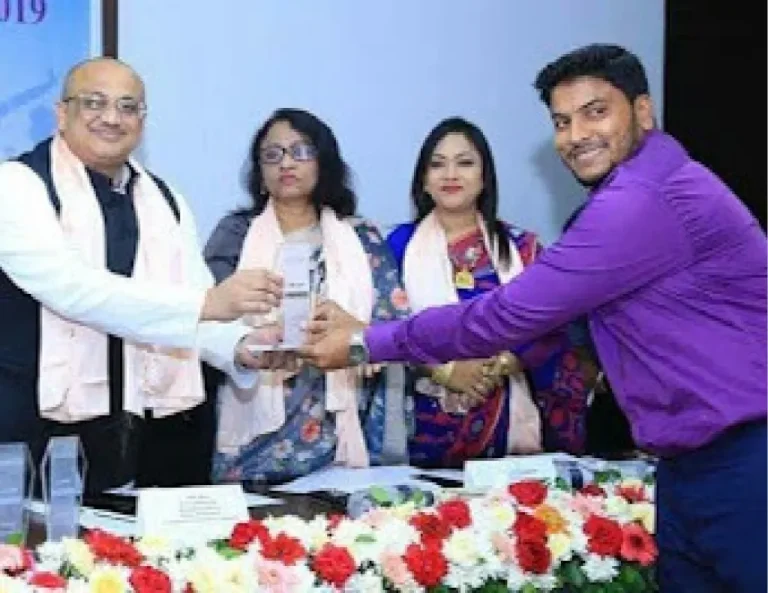
The award ceremony was held on 18 April 2013 in Dhaka, organized by the Acid Survivors Foundation (ASF). The event was graced by distinguished guests from the diplomatic community, human rights organizations, and media houses. The Chief Guest, Mr. Greg Wilcock, Australian High Commissioner to Bangladesh, handed me the award in a solemn ceremony that celebrated courage, journalistic integrity, and social responsibility. The jury panel for the ASF Media Award 2013 consisted of some of Bangladesh’s most respected intellectuals and cultural figures: Professor Akhter Sultana, academic and social researcher, Selina Hossain, renowned novelist and women’s rights advocate. Ramendu Majumder, veteran theatre personality and cultural activist and Shafiqul Alam Kiron, filmmaker and rights campaigner.
Their evaluation ensured transparency, integrity, and national credibility for the selection process. Being chosen by such a distinguished panel underscored the depth and quality of my journalistic contribution. This recognition placed me among seven distinguished media professionals nationwide from both print and electronic media honored for our contributions to human rights reporting, social justice advocacy, and the fight against gender-based violence.
Receiving the ASF Media Award was not just a professional milestone, but also a personal mission fulfilled. It strengthened my belief in the transformative power of journalism to give voice to the voiceless, to bring untold stories into the national conscience, and to influence policymakers toward building a safer, more equitable society. The award also symbolized the shared effort of survivors, activists, and media professionals working together to eradicate acid violence from Bangladesh. It inspired me to continue producing socially responsible content that contributes to public education, policy dialogue, and behavioral change at the grassroots level.